LLM Context Window Management in Long iOS User Sessions
Longer iOS sessions need architecture, not just bigger context windows.
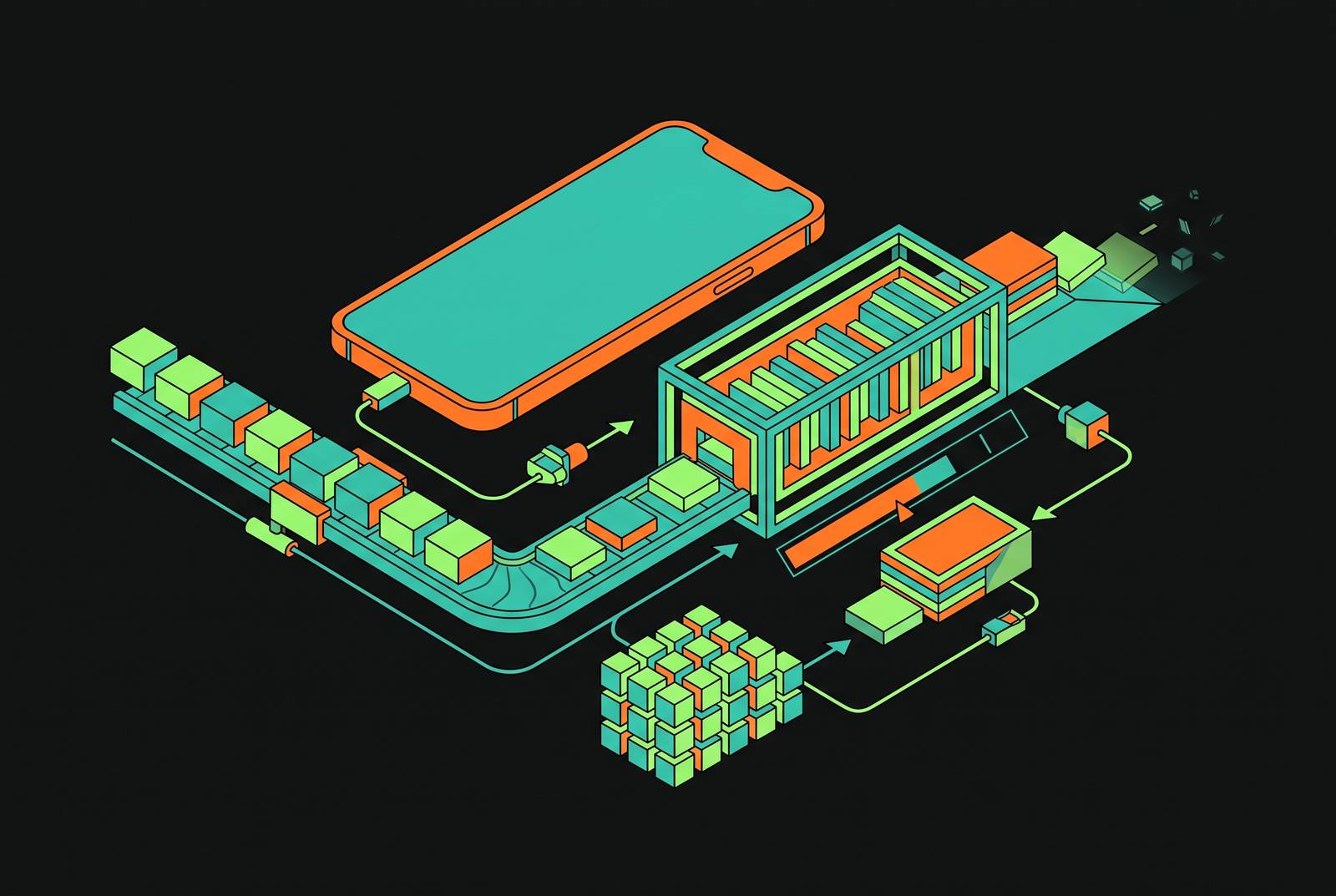
Long iOS user sessions make LLM context window management a core part of how an app is built. Keeping those sessions coherent requires more than a larger window. It requires measured token budgets, compressed history, durable structured state, and deliberate routing between on-device and cloud models, with a user interface that makes expensive work visible.
Why long iOS sessions expose a structural flaw in naive LLM integrations
An assistant can become less useful as a conversation continues without showing the user that anything has gone wrong. It may forget an earlier constraint or give a less faithful answer while the app still looks like one continuous session. This is a structural failure of integrations that treat conversation history as something to keep appending. Health coaching, fitness tracking, journaling, and shopping concierge apps are particularly exposed because their sessions are stateful and long by design.
The context window is the maximum number of tokens a model can use at one time. It defines what the model can consider when generating a response, and information outside it is unavailable. Research on long-context tasks describes the “Lost in the middle” finding, where performance worsens when relevant information sits in the middle of an input. Effective context can therefore be smaller than the advertised limit, and neither the user nor the app has a dependable warning unless the architecture includes detection.
How iOS hardware turns the context problem into a compounding constraint
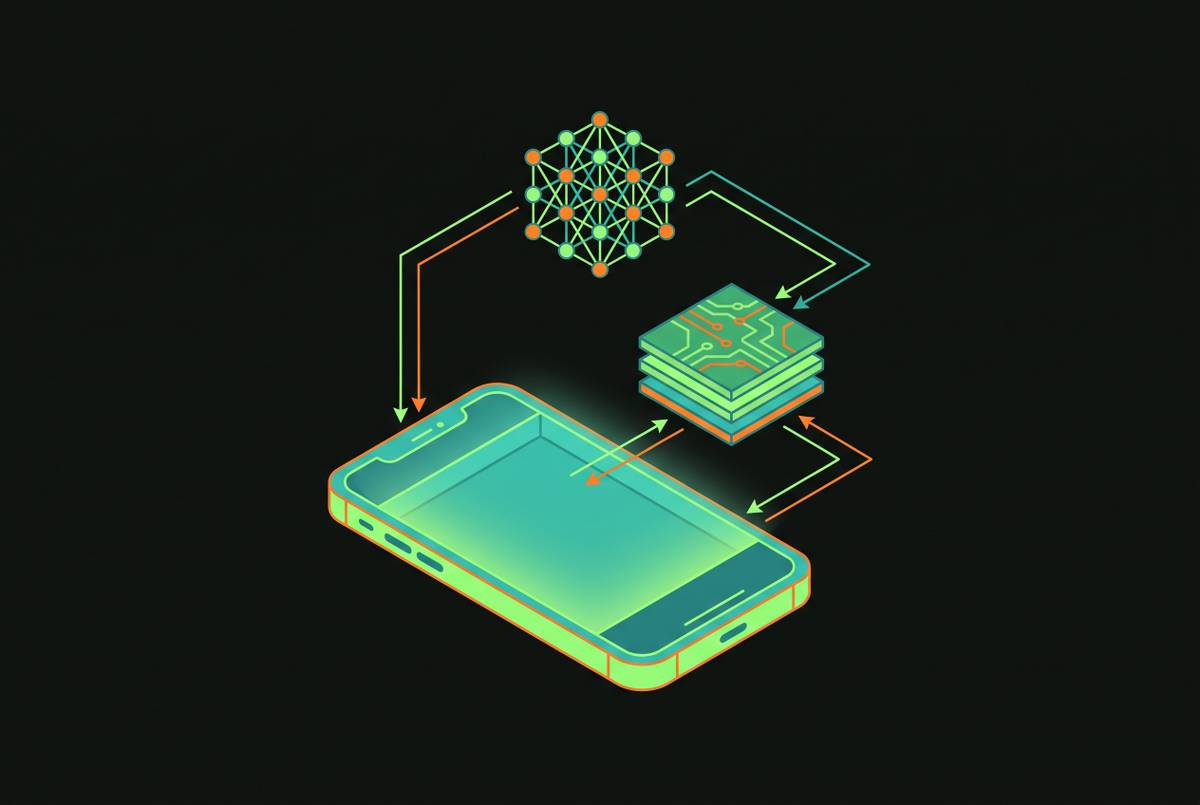
On iOS, battery, thermal, and RAM ceilings make that finite window more restrictive. Typical phone hardware is limited to models of roughly 4B parameters at most, while larger models require substantially more RAM than most phones carry. Quantization helps models fit, but it also changes the quality of their output. Longer context takes more compute as well as more space, so a longer session brings slower responses and uses more battery.
Those costs also vary across devices. Devices with 6 GB RAM are limited to the smallest models, while moderate-RAM devices can run models in the low-billions of parameters at useful speeds. Devices with 12 GB RAM, including iPhone 17 Pro, can run models with more parameters. A session that runs adequately on a high-RAM device can therefore degrade or fail one tier down. The app needs to query the available model budget rather than infer a universal allowance from its own configuration, because a hardcoded context assumption will be wrong for a meaningful fraction of users.
What Apple's Foundation Models API and WWDC 2026 actually changed for this problem
Apple introduced two introspection APIs on SystemLanguageModel in iOS 26.4. The contextSize property returns the combined prompt and response budget, while tokenCount(for:) measures actual input costs, including instructions, tools, schemas, and transcript entries. These replace a hardcoded guess with device-aware accounting. An integration that retains the old 4096 assumption can underuse an 8192 window on iOS 27+ hardware. The app still has to decide what history to keep, because neither API makes that choice.
Apple's WWDC 2026 Session 339 introduced the LanguageModel protocol, or LMP, which allows different providers to back the same LanguageModelSession. Passing a PrivateCloudComputeLanguageModel() instance instead of the default opens the Private Cloud Compute path through that API. PCC can take image input and has three reasoning levels, .light, .moderate, and .deep. It requires no API keys or developer token bill, but usage is metered against the user's iCloud account with a daily per-user limit that is higher for iCloud+ subscribers.
That path has real boundaries. Eligibility requires an application on the Apple Developer website and is limited to apps with fewer than 2 million downloads. PCC needs a network connection, and reasoning tokens consume context, so .deep can spend more tokens on its reasoning transcript than its answer. Availability must be checked at runtime with PrivateCloudComputeLanguageModel().isAvailable. These capabilities expand the available options without removing the need for compression, budgeting, or graceful fallback.
Why querying token counts before each request is the minimum viable discipline
The first engineering obligation is to measure prompt cost before every request. Without that measurement, compression can fire too late, too early, or not at all. The budget must include more than the latest user message, because instructions, tools, schemas, and accumulated transcript entries also consume tokens. It must also leave room for the response and any reasoning transcript. In .moderate and .deep sessions, overlooking reasoning means planning against capacity that is not actually available.
The advertised ceiling is not the safe operating limit. A common working heuristic puts the context that can be used at roughly half the advertised window for retrieval-heavy sessions, and less for reasoning-heavy ones. A commonly used compression trigger is consumption of the large majority of capacity, but that trigger must respect the workload's safe budget and fire before exhaustion.
Because tokenCount(for:) is async throws, accounting belongs in the session orchestration layer. That layer assembles prompts, manages history, applies limits, and handles cloud fallback. Keeping measurement there gives those decisions a shared budget instead of scattering assumptions across view models and individual call sites. It also avoids the paired failures of fixed limits, namely wasting larger windows and failing to compress before smaller ones fill.
Sliding-window summarization as the primary strategy for stateful long sessions
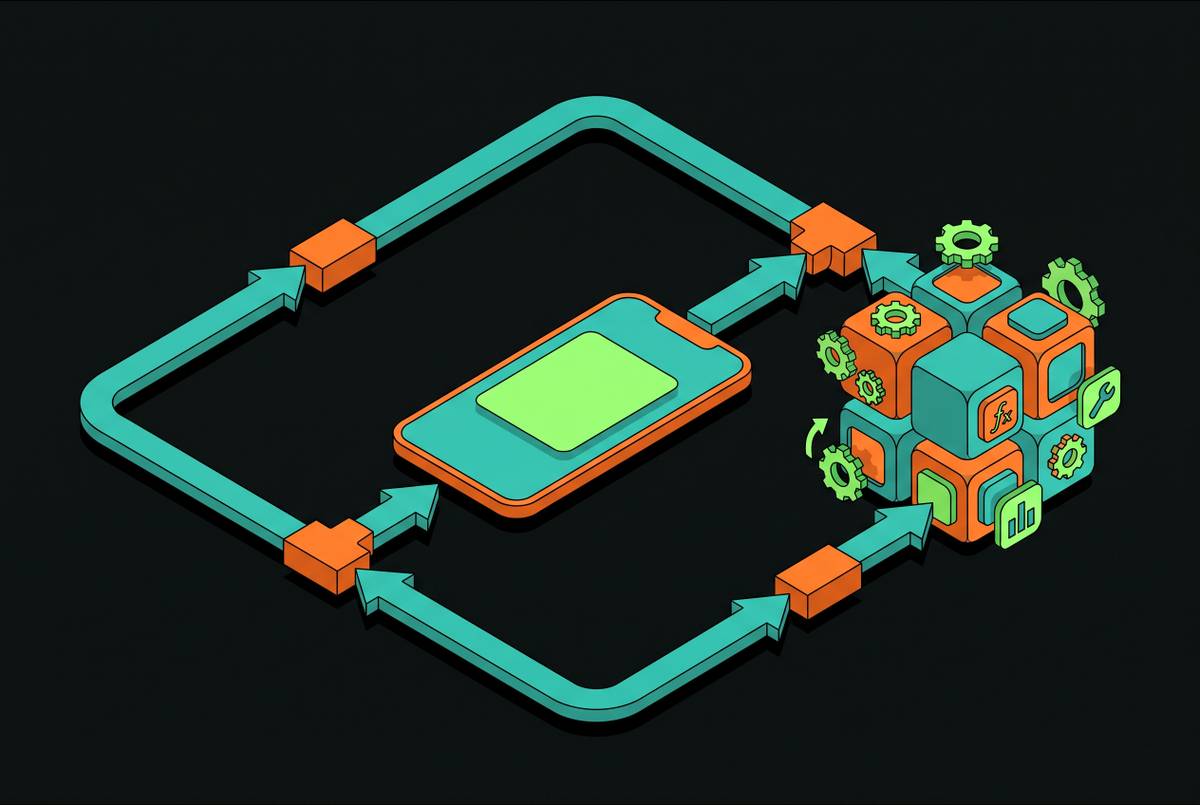
Sliding-window summarization is the right first layer for stateful consumer sessions. It keeps a fixed buffer of recent turns verbatim while compressing older conversation into a summary. When the token count crosses the trigger threshold, the model summarizes the earliest history segment and that summary replaces the raw turns in the prompt. This creates headroom without discarding the whole session. It also preserves recent exchanges in the exact form needed for conversational continuity.
The approach aligns with the tendency of models to attend better to the beginning and end of context than to its middle. Compressing older material shrinks that troublesome middle and cuts the hardware cost of later requests. The reduction can be substantial over a long conversation. However, a summary trades resolution for space, and that trade is not harmless.
A user who said “never recommend dairy” in turn 3 may find that constraint missing from the summary by turn 40. Repeated summarization cannot be trusted to keep preferences, exact details, and hard constraints intact. ACE (Liao et al., 2026) proposes retaining raw agent-trajectory steps together with abstractions, then choosing whether each step appears as raw, abstract, or dropped. That reversibility remains an active research direction with production use still unsettled. For application architecture, the immediate complement to summarization is structured external state, with important business rules enforced in application code.
Storing durable state outside the prompt to survive compression
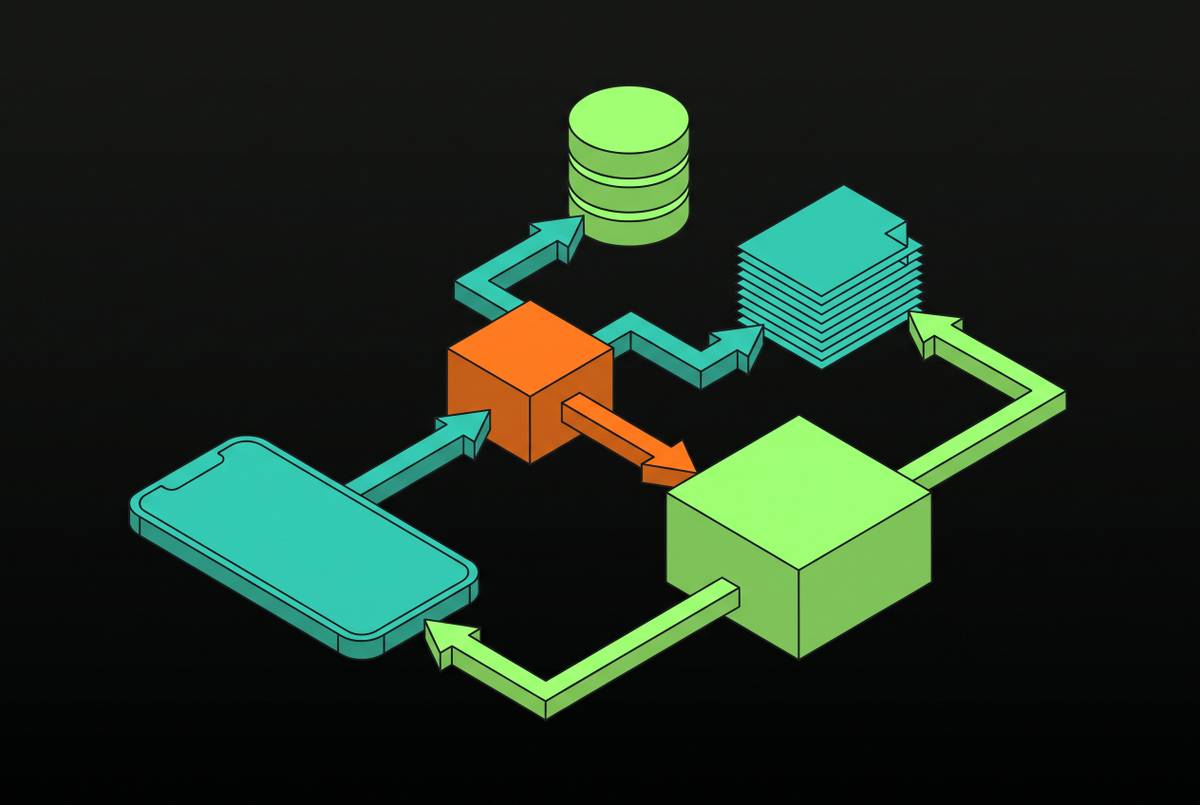
History records a chronological exchange and can be compressed, while facts are declarative and must remain exact. Dietary restrictions, fitness goals, account tier, explicit preferences, and current task parameters belong in structured application state. Back-and-forth exchanges, reasoning steps, and intermediate outputs belong in conversation history. Keeping both in one prompt buffer puts persistent facts at risk when history is compressed.
The orchestration layer should extract facts worth persisting after each turn and draw from that state when assembling later prompts. Relevant state is prepended as a concise, machine-readable block. Precision matters because this block consumes tokens on every request. For document-heavy sessions, retrieval-augmented generation extends the same principle by injecting only passages relevant to the current turn. This saves the most tokens for document-heavy workloads because the context no longer has to hold the full set of documents.
The store itself must also remain correct while session work runs concurrently. Swift 6's strict concurrency rules call for explicit isolation, so actor-based state managers are the right pattern to use. Background extraction tasks must declare their isolation context rather than treating shared state as an incidental implementation detail.
The cloud fallback pattern and how LMP makes it an architectural decision rather than a rewrite
With compressed history and durable state in place, the app can choose where the model runs for each request. The orchestration layer can consider the session's requirements and remaining local headroom rather than committing every request to one deployment at build time. LMP lets the same LanguageModelSession use on-device Foundation Models, PCC, or a provider such as Claude, Gemini, or a custom model. That shared Swift interface allows escalation without rewriting prompt assembly for each provider. It separates the choice of model from the management of session state.
PCC is useful for reasoning-heavy requests, document-heavy sessions that benefit from its 32K window, or sessions whose summaries remain large after the local compression trigger has been crossed. On-device inference remains the appropriate path for offline work, latency-sensitive flows, and sessions that fit within local headroom. It has neither a network dependency nor request limits. PCC's daily cap, by contrast, must be part of routing design.
The app must inspect quota state and offer an actionable response when cloud capacity is unavailable. Third-party providers through LMP offer another option when neither local inference nor PCC fits, including sessions that exceed the PCC window. Apple's Evaluations framework provides a way to measure intelligence-feature quality, so model routing should follow measured performance for the feature rather than assumptions about which tier must be better.
Streaming, progress indicators, and UX for sessions that do expensive work
Context management has visible consequences even when its internal decisions stay out of the interface. Long inference, summarization, and cloud fallback take time, and unexplained silence makes that work look like failure. Streaming generated tokens through AsyncStream lets the interface render output as it arrives. That preserves a sense of responsiveness without pretending the operation is finished. The interface should also show when compression and cloud escalation are taking place.
Reasoning needs progress feedback because .deep can produce a transcript much longer than its final answer. The interface should use the observable reasoning transcript to show progress while the work is still running. Agentic sessions can also show intermediate tool results during multi-step inference. When the daily PCC quota is exhausted, the interface should explain the limit and offer on-device fallback. These states belong in the session design.
Why native Swift is the only path to full context management capability on iOS
The architecture depends on capabilities that are fully accessible through native Swift, including token introspection, on-device inference, structured output, and LMP routing. Cross-platform wrappers can approximate parts of that surface, but reliability gaps matter most where session correctness depends on exact state. The @Generable macro works identically on-device and through PCC, and structured-output reliability is substantially higher on the native path than through wrappers. This is a capability argument before it is a performance argument. Durable state extraction needs dependable structure.
Shopify Engineering framed its move of Shop to native in September 2026 as a positive capability shift enabled by its increasing ability to develop with coding agents. That case shows that platform decisions can turn on newly available capabilities. For live AI sessions, native Core ML access also provides materially higher inference speed than wrappers. Users can see the difference during token streaming and context compression.
Swift 6's actor model also provides isolation when streaming, compression, and state extraction run at the same time. Owning this discipline as an AI Agent Architecture specialty means owning the budget, persistent facts, routing decisions, and user-visible transitions together. Long-session coherence is the result of an application architecture that controls what the model can use on every turn.